The Importance of Body Armour for Security Personnel: Choosing the Right Protection

When you work in security, staying protected isn’t just part of the job, it’s essential. Whether you’re patrolling an event, guarding a high-risk location, or working in private security, having the right gear can mean the difference between safety and serious injury.
Body armour isn’t just for law enforcement or the military; it’s a critical tool for security professionals who face unpredictable situations every day. Threats come in many forms, and not just from firearms. Security personnel deal with everything from physical altercations to knife attacks and, in extreme cases, active shooter situations. Without the proper protection, even a routine shift can turn dangerous in an instant.
That’s where body armour comes in. The right vest or plate can minimize the risk of life-threatening injuries, giving you the confidence to do your job effectively.
Not all body armour is the same. Some roles require lightweight, flexible protection, while others call for heavy-duty armour capable of stopping high-calibre bullets. Choosing the right one depends on your work environment, level of risk, and how much mobility you need.
Understanding the Threats: Why Security Personnel Need Body Armour
Working in security means facing a wide range of threats, and those risks vary depending on your role.
In a crowded nightclub, bouncers deal with aggressive patrons who might throw punches or pull weapons. Retail security officers may encounter desperate shoplifters willing to fight their way out. Corporate security professionals handle break-ins and workplace violence, while cash-in-transit guards face the threat of armed robbery.
The dangers are real, and proper protection is non-negotiable.
Gun violence is a growing concern, but it’s not the only one. Knife attacks are just as common, especially in close-quarters situations. Many violent encounters involve edged weapons, making stab-resistant armour a must-have for security personnel.
Blunt force trauma is another overlooked danger, whether from thrown objects, physical assaults, or falls. A well-designed vest doesn’t just stop bullets—it also absorbs impact, reducing the risk of serious injury.
Since risk levels differ from job to job, not all security roles require the same level of protection. A security officer in a low-risk corporate setting won’t need the same armour as someone handling riot control.
The key is understanding the threats you’re likely to face and choosing body armour that offers the right balance of safety, mobility, and comfort.
Types of Body Armour: Soft vs. Hard Protection
Body armour falls into two main categories: soft armour and hard armour. Each serves a different purpose and provides varying levels of protection.
Soft body armour is lightweight, flexible, and designed for everyday wear. It’s commonly used by law enforcement, private security, and personal protection professionals. Made from materials like Kevlar or Dyneema, it can stop handgun rounds and reduce the impact of blunt force attacks.
If you need mobility and comfort, especially for long shifts, soft armour is a great option. However, it does have its limitations, it won’t protect against rifle rounds or high-impact threats, making it less suitable for high-risk environments.
Hard body armour, on the other hand, is built for maximum protection. With rigid plates made of ceramic, steel, or polyethylene, it can stop rifle rounds and armour-piercing ammunition.
While this level of protection is essential for armed security, cash-in-transit guards, and riot control teams, it comes with trade-offs. Hard armour is heavier and bulkier, which can limit movement and increase fatigue over time. That’s why it’s typically reserved for high-threat situations rather than daily security work.
Choosing between soft and hard armour depends on the level of risk you face. If you need to stay quick on your feet and discreet, soft armour is the way to go. If your role exposes you to gunfire or high-impact threats, hard armour offers the protection you need.
Finding the right balance between safety and practicality is the key to staying protected without sacrificing comfort.
Protection Levels: Understanding NIJ Ratings
Not all body armour is created equal. The level of protection you need depends on the risks you face, which is where the NIJ (National Institute of Justice) rating system comes in.
This standardized system helps security personnel choose armour that matches their threat level. Knowing these ratings can mean the difference between wearing gear that keeps you safe and gear that leaves you exposed.
Soft body armour is rated at Levels IIA, II, and IIIA. Level IIA is the lightest and thinnest, designed to stop low-velocity handgun rounds. It’s comfortable and easy to wear but provides limited protection. Level II offers better defense against higher-velocity handguns while still being lightweight. Level IIIA is the highest-rated soft armour, capable of stopping most handgun rounds, including .44 Magnum and .357 SIG, as well as providing some protection against blunt force trauma.
For high-risk situations, hard body armour is the way to go. Levels III and IV provide protection against rifle rounds and other high-powered threats. Level III plates can stop standard rifle rounds like 7.62mm NATO, making them ideal for high-threat environments. Level IV offers the highest protection, designed to stop armour-piercing bullets. While these plates provide top-tier safety, they are heavier and bulkier, which can make movement more difficult.
Choosing the right NIJ level comes down to your job and the threats you expect to face. A security guard at a retail store won’t need the same level of protection as someone working in armoured transport. It’s all about balancing protection with comfort—because armour that’s too heavy or restrictive can make it harder to do your job effectively.
Choosing the Right Body Armour for Your Job
Your role in security determines the type of protection you need. Different settings come with different risks, and your armour should reflect that.
For event security and bouncers, mobility is key. You’re managing large crowds, breaking up fights, and dealing with aggressive individuals. Lightweight soft body armour at Level II or IIIA is a great choice. It protects against handguns and physical assaults while allowing you to move freely. Bulky gear isn’t practical in a fast-paced environment where quick reactions are critical.
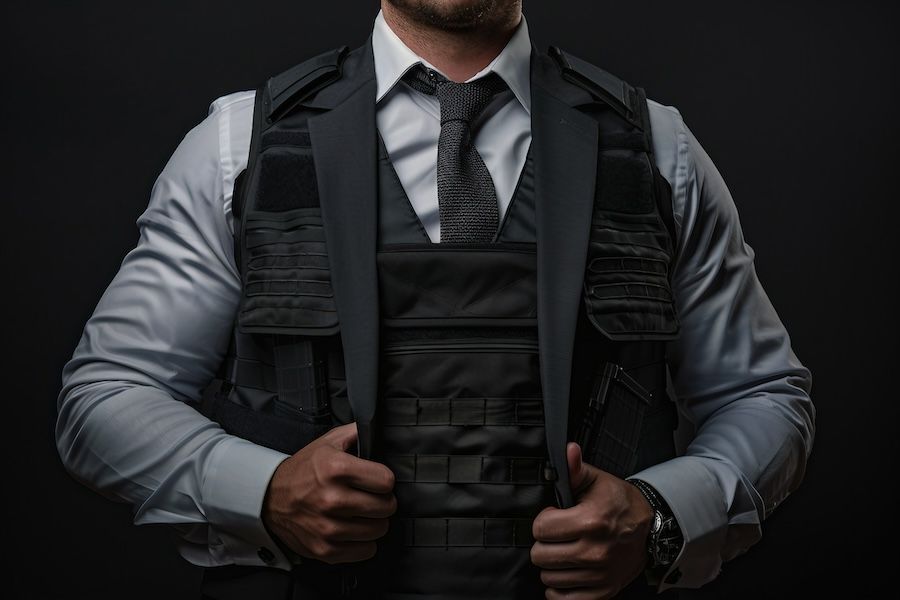
Private security and corporate protection roles require a balance between safety and discretion. You might be working in an office building, escorting VIPs, or guarding sensitive areas. Mid-level soft body armour (Level IIIA) provides solid protection without drawing too much attention. Many security professionals in these roles opt for concealed vests that blend in with everyday clothing.
For high-risk roles, such as armoured transport, riot control, or working in high-crime areas, hard body armour is a necessity. A Level III or IV vest with rigid plates can stop rifle rounds, making it ideal for situations where firearms are a serious threat. While heavier, this type of armour provides the protection needed for jobs with a higher chance of gunfire or violent attacks.
No matter what your role is, comfort and practicality matter. Body armour should fit well, distribute weight evenly, and allow for a full range of motion. If it’s too tight or heavy, it can slow you down and make your job harder. Finding the right balance between safety and usability is key to staying protected while performing at your best.