The Critical First Step: Evidence Collection Best Practices for Responders


When a first responder arrives at a crime scene, their first priority is always safety and saving lives. But immediately after that, their role shifts to becoming the primary guardian of the evidence. The initial actions taken at a scene are often the most critical for an entire investigation. If evidence is missed, contaminated, or improperly handled, it can be dismissed in court, and an entire case could collapse.
This article serves as a guide to the fundamental evidence collection best practices for first responders. We will detail the steps for securing a scene, the essential tools required, and the non-negotiable rules for preventing contamination.
Understanding these protocols ensures that every piece of evidence maintains its integrity, laying a solid foundation for justice.
Step 1: Securing the Scene (The Golden Rule)
The first, and most important, action a first responder takes regarding evidence is establishing and maintaining the scene’s perimeter. This is known as the "golden rule" of crime scene investigation. The scene is not just the immediate area where the crime occurred; it extends to anywhere the suspect or victim may have entered, exited, or moved through.
Establishing the Perimeter:
- Safety First: Assess for hazards (fire, dangerous suspects, unstable structures) before doing anything else.
- Define Boundaries: Use crime scene tape, vehicles, or personnel to establish clear physical boundaries. It is always better to make the perimeter too large than too small, as you can shrink it later.
- Establish a Log: Designate one person to manage a single entry/exit point and maintain a log of every person who enters or leaves the scene. This log is the foundation of the Chain of Custody record.
By securing the scene early, the first responder protects fragile evidence from being destroyed by foot traffic, curious onlookers, or environmental factors like wind and rain.
The Chain of Custody: Tracking Every Item
The Chain of Custody is the documented, unbroken transfer of evidence from the moment it is collected at the scene to the moment it is presented in court. If the chain is broken or unclear, the evidence may be considered unreliable.
For the first responder, maintaining this chain begins with the initial collection and documentation. Every piece of evidence removed from the scene must be documented immediately. This means filling out a detailed Chain of Custody card or form that includes:
- Case number and date.
- Exact time and location the item was found.
- A specific description of the item.
- The name and badge number of the collecting officer.
- Where and when the item was packaged and sealed.
This record follows the evidence as it moves from the scene to temporary storage, to the lab, and eventually to the courtroom. It legally proves that the evidence is the same item found at the scene and has not been altered or tampered with.
Preventing Contamination: The DNA Threat
In modern investigations, contamination is the greatest threat to evidence. Advances in DNA analysis mean that tiny samples of skin cells, hair, or saliva left behind by first responders can be mistaken for the suspect's DNA.
Preventing contamination is crucial for maintaining the integrity of all evidence.
The primary tool for contamination prevention is Personal Protective Equipment (PPE). Every person entering the secured scene should be wearing:
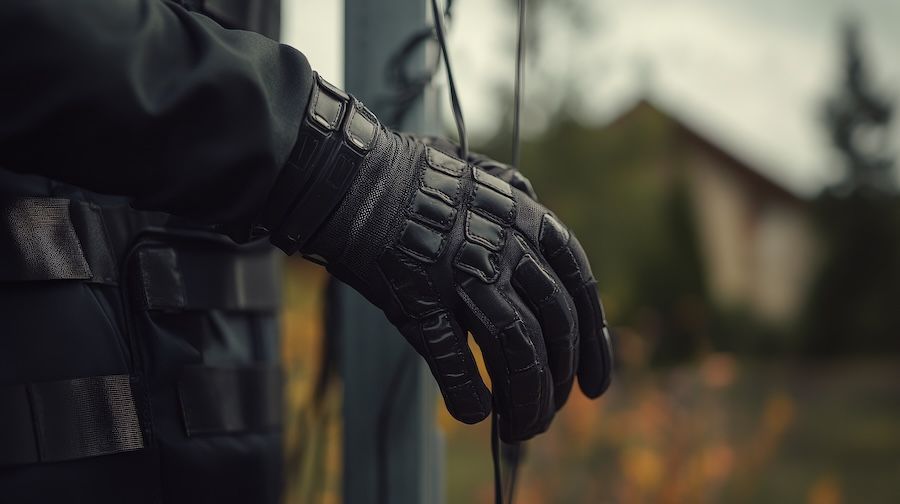
- Gloves: Wear disposable nitrile gloves and change the outer pair frequently, especially between handling different items of evidence.
- Booties: Disposable shoe covers or booties prevent the officer from bringing in contaminants (like dirt or fibres from their vehicle) and from leaving their own footprints or trace evidence at the scene.
- Masks/Respirators: Face masks prevent the officer from coughing, sneezing, or breathing on critical evidence like bloodstains or trace evidence.
First responders must also avoid simple, careless actions, such as eating, drinking, smoking, or using a personal phone within the perimeter. Even a small action can introduce DNA or foreign fibres that destroy the scene's integrity.
Essential Evidence Collection Equipment
While specialized CSI units handle complex evidence, first responders must have basic evidence collection equipment on hand for situations where time is critical (like weather or immediate danger).
The tools you carry are vital to properly managing the scene.
For example, tamper-evident tape and seals are essential for securing packaging. The seal must cover the entire opening and must include the officer's signature across it, proving that the evidence has not been opened since collection.
You also need markers and placards to flag and photograph the location of evidence before it is moved. It is a best practice that these placards have a ruler or scale included for accurate photographic documentation.
For delicate collection, disposable forceps and tweezers are required to handle small items like hairs, fibres, or casings without directly touching them. The most important rule here is to use the tool only once per item and then package the collection instrument along with the evidence itself.
Finally, crime scene tape is necessary to establish the perimeter, but you should use distinct colours or markings to denote inner versus outer perimeters when needed. Having a pre-stocked, clearly organized evidence collection kit in the patrol vehicle is a vital best practice for every first responder.
Proper Packaging: Paper vs. Plastic
Once collected, evidence must be packaged correctly to ensure it is preserved. The type of packaging is determined by the nature of the evidence:
- Wet Evidence (e.g., blood-soaked clothing, wet plant matter): Must be air-dried completely before packaging. Once dried, it should be placed in paper bags or cardboard boxes. Never use plastic bags for wet or moist evidence, as this traps moisture, leading to mold and biological degradation.
- Dry Evidence (e.g., firearms, casings, documents): Can be placed in clean, new paper or plastic bags. Firearms and knives must be secured in rigid cardboard boxes designed to prevent accidental injury and ensure the item is stable during transport.
- Trace Evidence (e.g., hair, fibres): Should be placed in a bindle (a special folded paper) and then secured inside a small envelope or container.
After packaging, all containers must be sealed with tamper-evident tape, initialled across the seal by the collecting officer, and clearly labelled with the case information and the officer’s name.
PSP Corp: Supplying the Right Tools
At PSP Corp, we understand that a successful investigation starts with a properly secured scene and the right evidence collection equipment. We provide a comprehensive range of forensic and evidence collection tools specifically curated for law enforcement and first responders in Canada.
Our commitment is to supply the precise, high-quality gear needed to maintain the Chain of Custody and prevent contamination. We help ensure that first responders have the necessary tools to safeguard evidence in those critical first moments, allowing the investigation to proceed with confidence and integrity.
Conclusion: Maintaining Integrity
The actions of the first responder at a scene are the cornerstone of the entire judicial process. By strictly adhering to best practices; securing the perimeter, maintaining the Chain of Custody, and meticulous contamination prevention, officers ensure that physical evidence remains viable and admissible.
Investing in training and proper evidence collection equipment is the best way to support the justice system. The goal is always to freeze the scene in time, ensuring that the evidence speaks the truth long after the first responder has moved on to the next call.