How Forensic Tools Aid Investigators in Crime Scene Analysis


Whether it’s a partial print, a hair strand, or a smudge of blood, one small piece of evidence can shift the entire investigation. But only if it's collected, preserved, and analyzed properly.
That starts with the right gear.
Outdated or low-quality tools can cause more harm than good. Cheap brushes shed fibres. Low-grade bags tend to tear or fail to seal properly. A weak UV light misses hidden fluids. That one misstep? It could mean a missed lead or a compromised case.
Good gear doesn’t just make your job easier. It protects your work. It preserves your findings. It supports the chain of custody, from scene to courtroom.
This article walks you through essential forensic tools used in the field by professionals. Whether you’re updating your current loadout or building a kit from scratch, we’ll break down what matters and why.
PSP Corp stocks gear that’s built for real-world crime scene work and designed with input from those who’ve been on the ground and in the lab.
Let’s get into the tools that help you get the job done right.
Fingerprint Kits: Your First Touchpoint with Evidence
Fingerprint kits are usually the first thing you reach for at a scene. Prints are fast, non-invasive, and incredibly valuable. But only if you’ve got a kit that works the way you need it to in the field.
A solid fingerprint kit should include more than just powder and a brush. You’ll want lifting tape, backing cards, disposable gloves, and sometimes even pre-cut gel lifters. The type of powder you use matters too; black, white, magnetic - each works best under different lighting and on different surfaces.
The difference between a basic kit and a professional one becomes obvious once you’re in action. You want a brush that holds its shape, powder that clings without clumping, and lifters that don’t wrinkle or lose stick. Low-quality kits can actually destroy the very evidence you’re trying to collect.
Look for kits that are designed for speed, accuracy, and ease of use in the field. Whether you're lifting off glass, plastic, or textured surfaces, you'll get results you can count on. These kits are built to travel, too - compact, rugged, and ready to go with you wherever you're dispatched.
The Power of Light: UV and ALS Tools in Scene Scanning
Not everything shows up under natural light. A lot of trace evidence like blood, fibres and fluids can stay completely hidden unless you're using the right kind of light source.
That's where alternate light sources (ALS) and UV tools come in.
These lights help you spot what your eyes alone can’t. Bodily fluids will fluoresce under certain wavelengths. Fibres will pop on otherwise clean-looking surfaces. Even trace residue or shoe prints can show up when you scan with blue or green light. That kind of visibility makes a difference early in the investigation.
There’s a range of options here, from simple handheld UV flashlights to full-spectrum ALS systems. The best ones strike a balance between portability and power. You need enough output to work in daylight or dim conditions, but small enough to clip to your kit or throw in a pack. Rechargeable batteries and durable housing are key, especially if you're in rough terrain or wet conditions.
Collection Gear: Secure, Labelled, and Court-Ready
You’ve found the evidence. Now you have to secure it. The way you collect and store that material can make or break your case.
Every piece of evidence must be collected without contamination and stored without risk of damage. That means tamper-proof bags, sterile swabs, tweezers, and sealable tubes or containers. It also means proper labelling and documentation at the moment of collection, not hours later.
If you’ve worked with cheap evidence bags, you know how frustrating it is when a seal fails or the label rubs off. That’s not just annoying, but it puts your chain of custody at risk, too. Poor quality materials can also degrade samples over time, making lab analysis difficult or impossible.
This is where having access to reliable, agency-approved collection gear matters.
PSP Corp offers both full evidence collection kits and individual components to help you build your own. Whether you need swab kits, paper envelopes, or heavy-duty biohazard bags, everything is selected with chain-of-custody integrity in mind. It's gear that supports your process, not one that slows you down or adds risk.
Documentation Tools: Notes, Photos, and Scene Accuracy
Accurate documentation isn’t just part of the job - it’s what ties the entire investigation together. If something can’t be accounted for or verified in your notes, it can be challenged in court. So, your tools for logging details need to be just as reliable as your collection gear.
Whether you're jotting quick notes or photographing a full 360 of a scene, having the right supplies on hand makes the difference. Waterproof notebooks are a must. Rain, snow, or sweat shouldn’t erase your entries.
Scene markers, scale rulers, and high-visibility tape help with positioning evidence and guiding photo documentation. Even something as simple as a well-labelled photo log keeps things clear when you’re reviewing findings later.
More teams are using hybrid or digital tools now, especially in tough conditions.
Rugged tablets with scene capture software, or compact cameras with timestamp and geotag functions, are becoming standard in larger departments. But no matter the tech, it’s the consistency and accuracy that count.
A good investigation is built on good records. Don’t let the small stuff trip you up.
PPE: Protecting the Scene and Yourself
Personal protective equipment doesn’t just guard you, it protects the scene from you. Every fibre, every droplet, every skin cell can contaminate an active investigation. Proper PPE helps stop that before it starts.
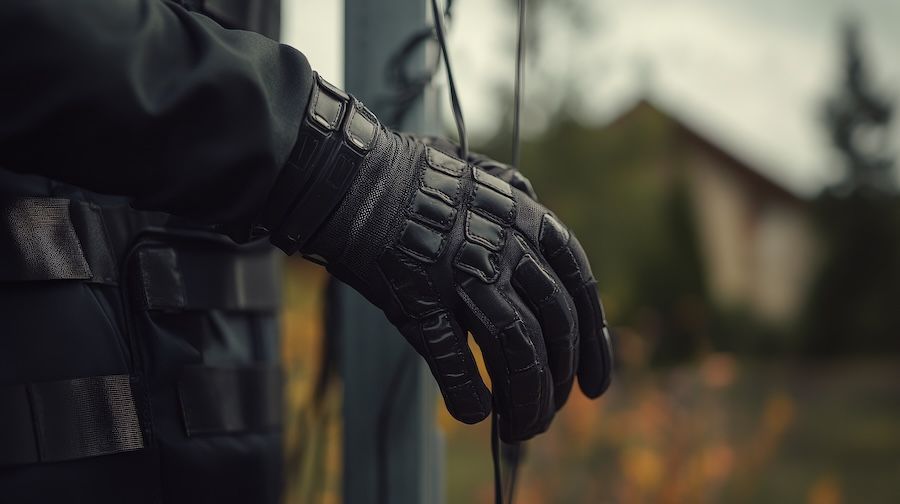
Gloves are obvious, but not all gloves are the same. You’ll want powder-free, non-latex options that won’t interfere with delicate materials or tests.
Coveralls should be breathable and allow for movement while keeping your clothing fully covered.
Face masks and eye protection are important in biohazard situations or when dealing with strong chemicals at the scene.
Boot covers stop trace evidence from being carried out, sometimes literally under your feet.
Comfort matters here, too. You might be wearing this stuff for hours at a time, in bad weather or tight spaces. If your suit is stiff, sweaty, or rips easily, it’s not doing you or your evidence any favours. That’s why it pays to choose PPE that’s made for forensic work, not just whatever’s cheapest or leftover.
Field Kits and Loadout Management: Stay Ready, Stay Mobile
It’s one thing to have good gear. It’s another to have it ready to go when it counts. When a call comes in, you shouldn’t be scrambling to gather your tools.
A solid field kit helps you move fast without missing anything.
Modular kits are ideal, especially if you cover different types of investigations. Maybe you handle both property crimes and violent scenes. Maybe you're the only tech in a rural area with limited backup. Being able to swap out modules (fingerprint kit, lighting tools, collection supplies) means you can tailor your loadout to the situation without carrying everything, every time.
Keep your gear compartmentalized and labelled. Use pouches, cases, or rolling bins if needed. The better your setup, the faster you can move, the less likely you are to forget something, and the easier it is to resupply after the job.
Conclusion: Tools That Back Your Training
Your instincts and training carry a lot of weight in the field. But they can’t make up for faulty or inadequate gear. If your tools can’t keep up, they put both your work and your case at risk.
Good forensic tools help you work cleaner, faster, and with more confidence. They protect the chain of custody, preserve delicate evidence, and support the story your investigation tells.
That’s not just helpful, it’s necessary.
This is the kind of work where there’s no room for shortcuts. If you’ve been using hand-me-down kits or making do with outdated tools, it’s time to audit your setup.
PSP Corp carries professionally tested gear that’s built for real investigators doing real work. Take a look at what we offer, match it against what’s in your loadout, and see where you can upgrade.
When the scene matters, when the evidence matters, your gear should never be a weak link.